About Cavity Pumps
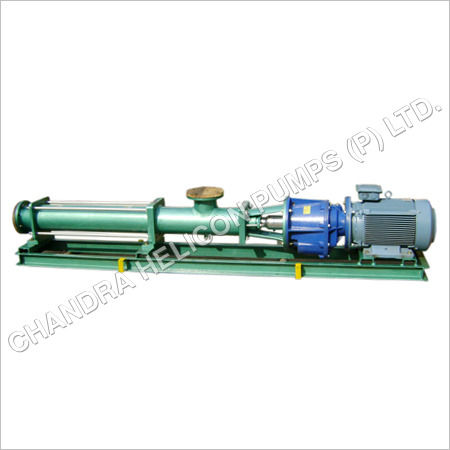
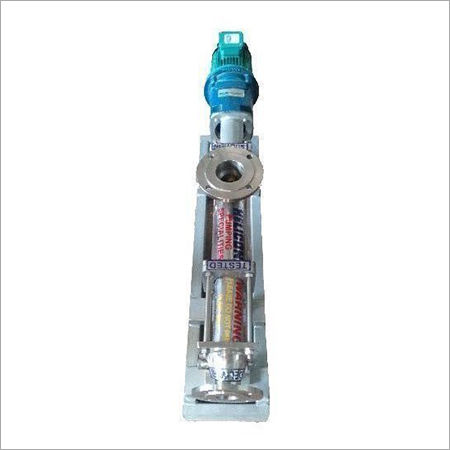
In this field we have got an international repute as one of the leading manufacturer and exporter of Cavity Pumps. These are rotor type positive displacement pump, used to suction cavity to conveying liquid volume change. Offered pumps are used in chemical, food, cement, sugar and rubber industry. We manufacture these pumps with the help of our expert workforce using high quality materials. Known for small vibration and low noise, these Cavity Pumps are available at reasonable prices.
Features:
- High pressure and efficiency
- Easy to disassemble and assemble
- Longer working life
- Can tolerate high percentages of free gas
- Good resistance to abrasion
- Relatively simple installation and operation
Technical specifications: - Capacity: up to 150 m3/ hr
- Pressure: up to 24 kg/ cm2
- Temperature: up to 120 C
- Viscosity: up to 100,000 CST
Efficient Fluid Handling Across Diverse IndustriesProgressive Cavity Pumps are engineered to address a broad spectrum of fluid transfer needs, from sewage and sludge management to chemical transfer and food processing. Offering impressive suction and discharge capabilities, these pumps reliably handle challenging materials while providing stable flow rates and maintaining low noise operation. The versatility in material and design ensures compatibility with corrosive and viscous fluids, making them an excellent choice for process industries.
Customizable Performance & Reliable StandardsThese cavity pumps offer tailored solutions for specific operational requirements, including selectable power, voltage, and frequency options. From compact skid-mounted units to baseplate-installed configurations, the pumps meet strict industry standards such as IS 5120 and API 676. The integration of both automated and manual control systems gives operators the flexibility to manage processes efficiently and safely.
FAQs of Cavity Pumps:
Q: How do progressive cavity pumps operate in industrial applications?
A: Progressive cavity pumps utilize a single screw design with positive displacement theory to smoothly transfer liquids, including viscous and abrasive materials. Their horizontal suction capability and baseplate or skid mounting make them suitable for continuous operation in various industrial processes.
Q: What is the benefit of using mechanical seals or gland packing in these pumps?
A: The choice between mechanical seals and gland packing allows users to optimize for leak prevention, maintenance ease, and compatibility with pumped fluid types. Mechanical seals provide superior leak resistance, while gland packing enables straightforward maintenance and is suitable for less aggressive fluids.
Q: When should I select cast iron, stainless steel, or alloy steel for pump construction?
A: Material selection depends on fluid properties and operational environment. Cast iron is ideal for non-corrosive and standard duty uses, stainless steel for corrosive or hygienic applications like food processing, and alloy steel for handling highly abrasive or chemically aggressive substances.
Q: Where are progressive cavity pumps typically installed?
A: These pumps are installed in facilities such as chemical plants, sewage treatment centers, food processing units, and petroleum refineries. Their versatility in mountingbaseplate or skidensures they fit different operational layouts and space requirements.
Q: What process can be controlled with automated versus manual control systems?
A: Automated control systems enable real-time monitoring and adjustment of pump operation, ideal for precision-driven processes. Manual controls offer straightforward operation for simpler applications or backup during power or system failures.
Q: How does this pumps design minimize noise during operation?
A: The progressive cavity mechanism, combined with solid construction and careful sealing choices, ensures smooth liquid transfer with minimal turbulence, resulting in significantly lower noise levels compared to other pump types.






 Send Inquiry


 Send Inquiry